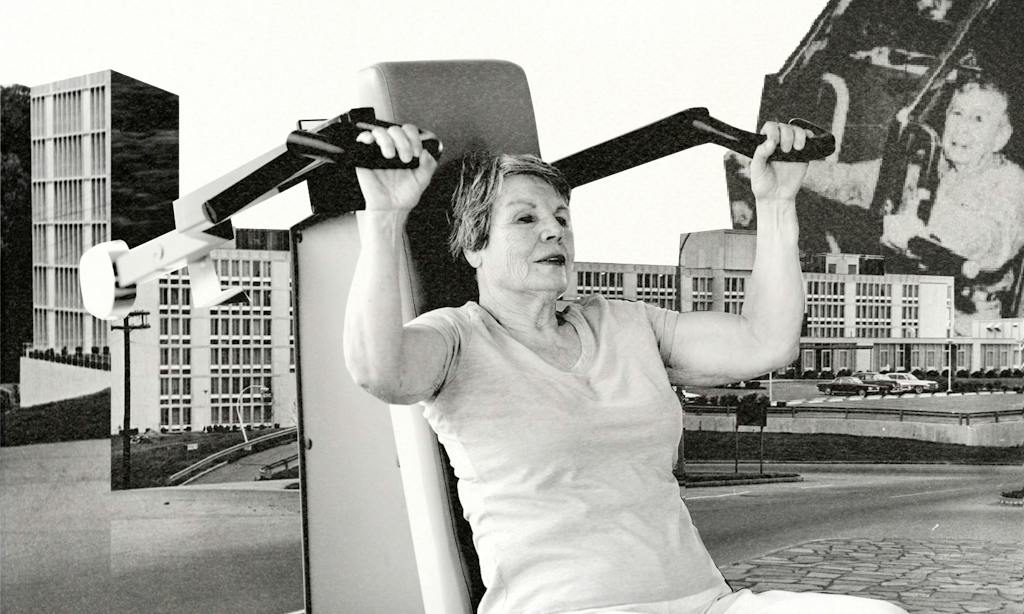
Dorothy Tishler was 92.
And nobody thought it was a good idea when Dr Maria Fiatarone asked her to start lifting weights.
In her first session, she lifted 17 pounds with each leg.
Eight weeks later, 60.
In the late 1980s, she was one of ten residents of the Hebrew Rehabilitation Center in Boston selected for the trial.
All were in their 80s and 90s.
Survivors of the Holocaust, the Cossacks, the Great Depression.
In other words, fighters.
But most had four chronic diseases.
Most were on four medications.
Eight of the ten had a history of falls.
Seven needed a cane or walker.
No doctor had ever asked a frail 90-year-old to lift weights.
They worried it might kill them.
It didn’t.
One exercise. Knee extensions.
Chosen because they could do it sitting down.
Three sessions a week. Eight weeks.
Average strength gain: 174%.
Walking speed up nearly 50%.
One person gained 374%.
Five years earlier, Tishler had barely been able to walk.
“I have become younger,” she told a reporter.
“Now I walk better than my daughter. And she’s only 72.”
She published in JAMA in 1990.
“The known hazards of immobility,” Fiatarone wrote, “outweigh the risks.”
That was thirty-five years ago. We’re still acting like we never read it.
Muscles don’t expire.
Unless we stop using them.
References:
Fiatarone et al 1990 JAMA – High-intensity strength training in nonagenarians
Fiatarone et al 1994 NEJM – Boston FICSIT study
Guardian – The ninetysomethings who revolutionized strength training (Mar 2025)
Hebrew SeniorLife – The study that redefined strength training and aging
And nobody thought it was a good idea when Dr Maria Fiatarone asked her to start lifting weights.
In her first session, she lifted 17 pounds with each leg.
Eight weeks later, 60.
In the late 1980s, she was one of ten residents of the Hebrew Rehabilitation Center in Boston selected for the trial.
All were in their 80s and 90s.
Survivors of the Holocaust, the Cossacks, the Great Depression.
In other words, fighters.
But most had four chronic diseases.
Most were on four medications.
Eight of the ten had a history of falls.
Seven needed a cane or walker.
No doctor had ever asked a frail 90-year-old to lift weights.
They worried it might kill them.
It didn’t.
One exercise. Knee extensions.
Chosen because they could do it sitting down.
Three sessions a week. Eight weeks.
Average strength gain: 174%.
Walking speed up nearly 50%.
One person gained 374%.
Five years earlier, Tishler had barely been able to walk.
“I have become younger,” she told a reporter.
“Now I walk better than my daughter. And she’s only 72.”
She published in JAMA in 1990.
“The known hazards of immobility,” Fiatarone wrote, “outweigh the risks.”
That was thirty-five years ago. We’re still acting like we never read it.
Muscles don’t expire.
Unless we stop using them.
References:
Fiatarone et al 1990 JAMA – High-intensity strength training in nonagenarians
Fiatarone et al 1994 NEJM – Boston FICSIT study
Guardian – The ninetysomethings who revolutionized strength training (Mar 2025)
Hebrew SeniorLife – The study that redefined strength training and aging